Life Coaching Designed
Specifically For You
The majority of my clients get what I would term very significant value from their sessions. They are able to sharpen their life and/or relationship goals; they get clarity on a path (or paths) forward to achieve those goals, and they acquire knowledge or enhance certain skills that help them get to those goals. Because they are imparted with new strengths, attitudes, and perspectives they are able to identify and pursue possibilities that weren’t even imagined before, or which might have been imagined but then dismissed as impractical or impossible.
What to expect from Life Coaching
Life Coaching
Life coaching emerged as a viable field perhaps 25 years ago, as the generally formal nature of psychotherapy proved inadequate in many cases to deal with the increasingly complex lives of the many people who needed help. That coincided with the increasing numbers of people who desired to enter the work force in a helping capacity but didn’t want to invest the time and money necessary to earn degrees and licensure in psychology.
Unfortunately life coaching has not earned a sterling reputation, due in great part to the fact that too many life coaches have a coaching certification but not the life experience, and breadth of client experience, to be optimally effective.
The most effective life coaches possess a number of essential skills. Here are a few:
- An ability to connect with people so that they feel comfortable, safe, and understood.
- An ability to take an objective stance, separating themselves from client prejudices, fears, and limitations and believing in the client’s power to advance and improve.
- A knowledge of techniques that can be effective in dealing with common roadblocks to personal progress, for example how to build motivation and self-confidence, how to reduce anxiety, how to improve organizational ability.
- Finally, a personal history that demonstrates success.
It is this last element that all too many coaches lack. Demonstrated ability to succeed in the real world (whether professional, relational, or interpersonal) is a powerful signal that the coach hasn’t just learned a set of “one-size-fits-all” techniques (which is what most coaching programs teach), but can understand how to apply them successfully to the real world.
Most coaches focus on engaging and bringing to the fore hidden internal resources. For many clients this is an effective approach. But unfortunately in myriads of cases the internal resources are either insufficiently developed, blocked, or otherwise inaccessible.
I call myself a Life Consultant because I see the services that I offer as closer to what a consultant would provide as opposed to what a coach would. Broadly speaking, a consultant in the corporate world is brought in to help an organization tackle a problem that it has been unable to solve using its own resources. These organizations generally seek a different perspective and a set of specific knowledges and skills that can be applied to the problems being faced.
A coach, while similar to a consultant, focuses more on assessing the strengths of the organization and its members and then works to enhance them. So, if you know you have the strengths, skills, and qualities necessary to succeed but just don’t know how to harness them, a life coach is a great place to turn. If, though, you may need more in terms of objectivity and new approaches to solving the issues you are wishing to solve, I strongly urge you to look more in the direction of a consultant (like me!).
Client Reviews
I’ve introduced Jim to many colleagues and friends – from recent college graduates to CEOs. In every instance, he’s offered sage advice, solid direction, compassionate support leading to superb results.
As an executive search/headhunter I have been lucky enough to partner with Jim on a number of occasions. I have referred several local and remote (Skype, etc.) mid-level to executive-level candidates to him who have reported back to me with rave reviews. Jim has also consulted with me whenever my executive search expertise has been a helpful element to his full-service thoughtful career advice he provides his clients. 100% class act and worth the investment.
Jim’s career counseling expertise has had a demonstrable, positive impact in my professional and personal life. Most importantly, Jim has offered me usable tools that have improved the quality of my life, as well as given me a more meaningful career outlook. For example, Jim has helped me set professional boundaries and given me tools to navigate the C-suite in ways that actually make me happier at work on a day-to-day basis and have earned me professional accolades. He really is a “Business Buddha” as well as a great counselor.
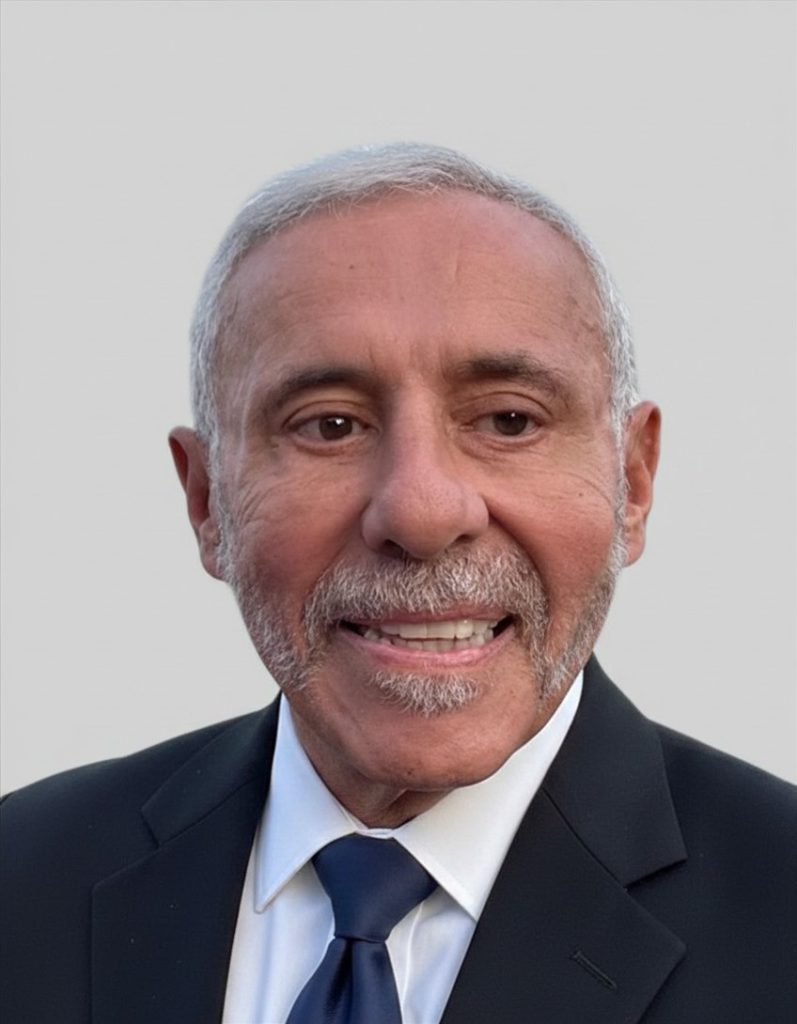
Top Life Coach
Greater Washington D.C. and Beyond
I’ve helped clients from all over the greater D.C. area land their dream jobs and make successful career transitions. I’ve also taken on clients from across the United States and world in a virtual setting. I also counsel clients at my home office in Alexandria.
Frequently Asked Questions
Normally, sessions are 50 minutes long, although arrangements can be made for longer sessions.
The answer to that question depends entirely on the issue(s) you are seeking to resolve. If you’re coming in for something fairly straightforward, such as networking or interviewing coaching, or to improve your resume/LinkedIn profile/cover letter, you’ll probably need to meet with me once or twice. If you’re looking to tackle a more complex issue (e.g. if you’re dissatisfied with your current career but don’t know what alternatives would make sense, and/or if there is a significant emotional block like low self-confidence or debilitating anxiety) we’re probably looking at somewhere between four and eight sessions. After a preliminary conversation with you I’ll be able to give you a reasonable estimate.
For the foreseeable future I am only conducting sessions virtually (FaceTime, WhatsApp, Zoom, Skype, or phone). I have found virtual sessions to be just as effective as in-person, in addition to being more convenient for both my clients and me. I can schedule sessions just about any time between 10 a.m. and 7 p.m. weekdays, and even on weekends if necessary.
My rate per 50 minute session ranges from $300 to $500. The rate varies according to the complexity of the issue(s) we will be working on, and your ability to pay.
If, after our initial meeting we determine that multiple sessions make sense, I will be happy to discuss a package with a reduced per-session fee.
If you are eligible for insurance reimbursement (i.e. if our work together involves a significant emotional or psychological component, and if you have out-of-network mental health benefits), I will be happy to provide you with the documentation necessary for reimbursement. Unfortunately I will not be able to determine whether you have coverage as there are hundreds of types of plans offered by insurance carriers; you will need to contact your carrier or HR department to determine whether your plan provides coverage for my services.
Zelle, Venmo, PayPal, check or cash.
The primary tasks in our first session will be:
- Agree to a goal (s) for our work together.
- Get to know each other so as to ensure that we’re a good “fit” (it’s very rare that the fit isn’t good).
- Agree to next steps that will begin to move the ball forward. I believe that every session should include assignments that will result in progress towards our agreed-upon goals.
Despite conventional wisdom, most people do not have one passion buried inside of them that simply needs to be discovered. More generally, people are capable of developing passion for multiple careers.
Most certainly. There are proven techniques that can enhance job satisfaction to at least some degree. Whenever I work with clients who are dissatisfied with their job or their career I make sure to devote at least some time to teaching these techniques in addition to working on exploring alternatives and improving their ability to find better employment.
Here are some signs to pay attention to:
Days are stressful – and only stressful (there are relatively few moments of true satisfaction).
You’ve changed yourself to fit the position (the fit was good when you started but the position has evolved away from your strengths/likes perhaps because of outside factors like a takeover, a reorganization, or downsizing.
Your job is a dead end with no obvious positions to move up to.
You chased the money but have realized that just the paycheck isn’t enough to fulfill you Quitting time is the day’s highlight.
There’s been a shift in organizational values (more emphasis on the bottom line? Less ethical?).
You’re having performance struggles (your evaluations aren’t decent, feedback from superiors is negative).
Work/life balance is progressively getting worse – Unless you can confidently predict that a deterioration in work/life balance is temporary, it is often a sign that your organization is investing in fewer resources than is necessary to get the job done well.
You’re having difficulty getting along with your boss – It may happen that you find yourself with a new boss. If your day-to-day relationship with that boss becomes uncomfortable, or in the worst case scenario contentious, you should start considering moving on. Most people underestimate the influence that their bosses have on their career trajectories; it is generally enormous. So even if you are doing an outstanding job in the eyes of your co-workers, and even others in management, a bad relationship with your boss is frequently fatal.
I have had 4 successful careers – as advertising executive, psychotherapist, non-profit president and career counselor, so I know the challenges inherent in launching and thriving in different jobs. And having built fulfilling lives in 3 vastly different cities- NY LA and DC – gives me valuable additional perspective. Plus having coached many hundreds of clients in just about every conceivable field and through all kinds of challenges I have an unmatched breadth of career knowledge and insight.
Insight – my training as a therapist allows me to better under my clients and helps me provide them with superior guidance. Tone of voice, facial expression, body language, the stories you use to illuminate your history and the way you express yourself – confidently, tentatively, modestly, with an edge – all help me understand you and allow me to tailor our conversations and the homework I usually give so that they achieve maximum impact.
Creativity- I thrived in advertising, a career in which creativity is the most important attribute. It’s one I cherish .Helping my clients think in new ways, see new patterns, and identify opportunities that are sometimes unorthodox are skills that have repeatedly borne fruit.
Intelligence – it’s uncool to boast but as a Phi Beta Kappa, Harvard graduate and Jeopardy winner I think my background speaks for itself.
Curiosity- I’m interested in a huge range of topics ( that really helps on Jeopardy!$ I’ve been to all 50 states and over 80 countries. I speak 5 languages. And what drew me to psychotherapy and career work was the chance to hear the stories and share the experiences and the world view of an astounding variety of people. I love learning about them and coming to understand them.
Achievement orientation ~ I’ve always been motivated by getting results., whether grades, honors, fluency, mastery, or concrete contributions to others. Providing specific, actionable guidance to Help my clients find greater satisfaction in their lives is more than a job – for me it’s a joyous endeavor.
“I will coach you on the techniques you need to do it beautifully.”
Featured Blogs
Helpful Tips & Advice

How to Maximize the Value of Coaching or Counseling There is a wide variation in the results that clients get from work…

What Exactly Is Life Coaching? “Exactly” is what can’t be specified when attempting to define life coaching, because it…

Three Key Steps to a Better Job, Career, and Life I’ve been thinking for a couple of weeks now about what would be the …
Ready to Begin?
The first step is a complimentary 15–20 minute conversation — completely free, no obligation. Fill out the form and Jim will be in touch personally. No pressure, no scripts, just a genuine exchange about what you need.
Phone
(202) 667-0665
Jim@DCLifeCounseling.com
Main Office · Alexandria, VA
2405 Brentwood Place
Alexandria, VA 22306
Part-Time Office · Washington DC
1633 Q St., NW, Suite 200
Washington D.C. 20009